


Introduction to EMF and Sleep
Good sleep is a biological reset. If you’re looking to reduce EMF while sleeping, it helps to understand what you’re trying to lower and why. Electromagnetic fields (EMFs) include low-frequency fields from household electricity and higher-frequency radiofrequency (RF) signals from wireless tech. At everyday levels, exposures are typically far below international safety limits, yet many people take a precautionary approach at night to support deeper rest.
There are three main categories to keep in mind:
- Electric fields (V/m): created by voltage on wiring and devices, even when they’re “off”
- Magnetic fields (mG or µT): produced by current flow in wiring and appliances
- Radiofrequency (V/m or mW/m²): emitted by Wi‑Fi, mobile phones, Bluetooth, and smart devices
Common bedroom sources include:
- Phones, smartwatches, tablets, and e‑readers on the nightstand
- Wi‑Fi routers, mesh nodes, and streaming boxes near or under the bedroom
- Cordless phone bases and baby monitors
- Smart speakers, wireless chargers, and Bluetooth headphones
- Clock radios, power strips, and chargers near the bed
- Electric blankets, heated mattress pads, and adjustable bed motors
- Hidden wiring behind the headboard and metal bed frames that can couple with electric fields
What does the science say about health effects EMF and sleep? Findings are mixed. Controlled studies have observed subtle changes in brain activity during sleep with RF exposure close to the head, while large population studies generally don’t show consistent sleep impacts at typical residential levels. Major health agencies set exposure limits for electromagnetic field safety that already include wide safety margins. Still, minimizing avoidable nighttime exposure—especially from devices near your pillow—is a reasonable step for bedroom EMF reduction.
Two factors matter most: proximity and duration. Near-field sources within arm’s reach can contribute more than faraway devices. Increasing distance and reducing transmit time have outsized effects. For example, a phone on airplane mode across the room leads to far less RF exposure than an active phone on the nightstand.
When you think about EMF protection sleep strategies, use a simple hierarchy:
- Remove or disable sources you don’t need at night
- Increase distance from unavoidable sources
- Reduce power or duty cycle (e.g., airplane mode, scheduled Wi‑Fi off)
- Address fields from wiring (positioning, grounding, and, if needed, professional assessment)
Grounding for sleep focuses on a different, measurable parameter: body voltage relative to Earth. When you’re in contact with a grounded conductive surface, your body tends to equalize with Earth’s potential, often lowering induced electric fields from surrounding wiring. This can be demonstrated with a body voltage meter before and after grounding. Grounding sheets or mats designed for indoor use provide this connection; many users report calmer sleep, though clinical evidence is still limited. As with any approach, combine grounding with basic source reduction for a comprehensive plan to reduce EMF while sleeping.
What Are Electromagnetic Fields?
Electromagnetic fields (EMFs) are invisible areas of energy produced by electrically charged objects. In practical terms, anything powered by electricity or that sends wireless signals generates EMFs. These fields vary by frequency and behave differently depending on their source.
Common types you’ll encounter at home, especially in the bedroom:
- Extremely low frequency (ELF) fields: Created by household electricity at 50/60 Hz. Electric fields come from voltage (even when a device is on but not drawing power), while magnetic fields come from current flow. Examples: wall wiring behind the headboard, power strips under the bed, alarm clocks, lamps, electric blankets, and heating pads.
- Radiofrequency (RF) fields: From wireless communication—Wi‑Fi routers (2.4/5 GHz), smartphones, tablets, Bluetooth devices, cordless phones, smart speakers, and baby monitors. These emit in bursts based on data activity.
- Static fields: Such as the Earth’s natural magnetic field (constant, DC) and permanent magnets. These are different from powered household sources and are typically not a bedroom EMF reduction target.
How EMFs interact with the body depends on frequency. ELF fields can induce small voltages and currents; RF energy can be absorbed by tissues, quantified by specific absorption rate (SAR). Exposure is usually described in volts per meter (V/m), microtesla (µT), or power density (mW/m²). International guidelines (e.g., ICNIRP, FCC) set limits well above typical home levels for electromagnetic field safety. While research on long-term health effects EMF at low levels is ongoing, major health agencies generally conclude that exposures within guidelines are not confirmed to cause harm. Still, many people choose prudent steps for EMF protection sleep, especially because we spend a third of our lives in bed.
Why this matters at night:
- You’re stationary for long periods, so proximity to a source matters more.
- Devices placed near the bed can create higher localized exposure than distant sources.
- Simple habits often meaningfully reduce emf while sleeping without sacrificing convenience.
Examples of bedroom sources and behaviors:
- A switched-off lamp still produces an electric field if left plugged in; unplugging removes it.
- A phone on the nightstand emits RF periodically unless in airplane mode with Wi‑Fi/Bluetooth off.
- A power strip under the bed can create both electric and magnetic fields close to the mattress.
- Electric blankets and heating pads generate stronger ELF fields when in use.
Grounding for sleep is one approach some people use to address ELF electric fields. By connecting your body to a verified earth ground via conductive bedding or a mat, your body voltage relative to the room’s wiring can drop substantially. This does not “block” RF or magnetic fields, but it can reduce AC electric field exposure at the body surface. For safety, use purpose‑built products and a properly grounded outlet, and follow manufacturer guidance.
Understanding which type of field you’re dealing with helps you choose targeted bedroom EMF reduction steps: distance and power management for magnetic fields, unplugging and grounding for electric fields, and turning off transmitters or using airplane mode for RF.
Why Reduce EMF Exposure at Night?
Night is when your brain and body do their heaviest repair work—consolidating memory, balancing hormones, and restoring the nervous system. Reducing unnecessary electrical and wireless exposure during this window can remove a layer of stimulation that may interfere with deep, continuous rest. Many people aim to reduce EMF while sleeping because small changes at night can yield disproportionately positive effects on sleep quality and next‑day energy.
Bedrooms often contain multiple EMF sources in close proximity to the body for long durations: Wi‑Fi routers or mesh nodes nearby, smartphones charging on the nightstand, Bluetooth wearables, baby monitors, smart plugs, and power supplies under the bed. Even simple items—alarm clocks, lamps, extension cords, and electric blankets—produce electric and magnetic fields. Distance is a key factor; field strength drops quickly as you move away from a source. That’s why relocating or shutting off devices near the bed is a core bedroom EMF reduction tactic.

What does the science say? Safety guidelines from international bodies focus on preventing acute heating effects, and most household exposures are well below those limits. However, sleep-specific research has noted that certain radiofrequency exposures can subtly alter EEG patterns (for example, sleep spindles) in tightly controlled lab setups, while other studies find no meaningful impact. Given the mixed evidence and the importance of sleep for overall health, a precautionary approach—minimizing nonessential exposure at night—aligns with practical electromagnetic field safety without requiring extreme measures.
Reducing radiofrequency and low-frequency fields while you sleep also tends to reduce behavioral sleep disruptors. Silencing or distancing a phone eliminates late-night notifications, screen-time temptation, and stray light, all of which are known to disrupt melatonin and circadian timing. Many people report fewer awakenings simply by keeping electronics out of arm’s reach.
Grounding adds another layer for those seeking EMF protection sleep strategies. By connecting your body to earth potential, grounded bedsheets or mats can lower the induced electric fields on your body from nearby AC sources. This doesn’t “block” wireless signals, but it can reduce your body voltage from ambient electrical sources. Small preliminary studies on grounding for sleep report improvements in perceived sleep quality, stress, and pain for some individuals. If you explore grounding, use properly designed products and ensure the grounding path (e.g., wall outlet ground) is correctly wired.
Practical examples that illustrate the “why” behind nighttime reduction:
- Moving a power strip from under the bed to several feet away reduces the electric field reaching your mattress.
- Placing a phone in airplane mode (or charging it outside the bedroom) removes a nearby RF source and the urge to check it.
- Turning off a bedside Bluetooth speaker eliminates a constant transmitter near your head.
- Using a grounded bedsheet or mat can reduce body voltage from surrounding wiring, supporting a calmer sleep environment.
Taken together, these steps create a quieter electrical environment, helping you fall asleep faster, minimize micro-arousals, and wake more refreshed—with minimal cost or complexity.
Common Sources of Bedroom EMF
Bedroom EMF comes from more places than most people realize. Understanding the main sources—radiofrequency (RF), low-frequency electric fields, and magnetic fields—makes it easier to reduce emf while sleeping without overhauling your entire space.
- Phones and wearables
- Smartphones on the nightstand constantly communicate via cellular, Wi-Fi, and Bluetooth unless fully powered down or in airplane mode.
- Smartwatches and fitness trackers ping intermittently, even while charging.
- Cordless (DECT) handsets, baby monitors, and smart speakers create steady RF in the room.
- Wi‑Fi and network hardware
- Wi‑Fi routers, mesh nodes, and extenders emit 2.4/5 GHz signals around the clock. A router in a nearby hallway or under the bedroom can still contribute.
- Game consoles, streaming boxes, and smart TVs generate RF when connected wirelessly, and their power supplies add low-frequency fields.
- Bedside electronics and chargers
- Alarm clocks, lamps with touch dimmers, and phone chargers radiate low-frequency electric fields when plugged in; chargers with transformer “bricks” also create localized magnetic fields.
- Power strips under the bed and cords coiled by the headboard can raise electric and magnetic field levels where you sleep.
- Heating elements and lighting
- Electric blankets and heated mattress pads produce 50/60 Hz magnetic fields when on; even when off but plugged in, their wiring can produce electric fields.
- Dimmer switches and some LED drivers introduce higher-frequency switching noise on circuits that run through bedroom walls.

- Building wiring and nearby infrastructure
- Improper or older wiring, net currents on circuits, or multi-wire branch circuits with shared neutrals can create elevated magnetic fields in certain spots.
- Large appliances or equipment on the other side of a wall or below the bedroom—refrigerators, breaker panels, HVAC air handlers, aquariums—can leak fields into the sleeping area.
- External sources like smart meters or outdoor utility panels mounted on the bedroom wall can be significant if placed near the head of the bed.
- Hidden emitters in “smart” devices
- Smart bulbs, plugs, and sensors chat with hubs or the cloud. Even small devices can add to RF if they’re close to the bed.
Quick checks for bedroom EMF reduction:
- Increase distance: relocate routers and power supplies away from the bed; don’t charge a phone on the nightstand.
- Disable transmitters at night: use airplane mode, turn off Bluetooth/Wi‑Fi on idle devices, or schedule router downtime to support EMF protection sleep habits.
- Unplug nonessential items: swap to a battery alarm clock; avoid using electric blankets while sleeping.
- Map hot spots: a basic EMF meter or body-voltage tester helps pinpoint problem areas to improve electromagnetic field safety.
Note: Grounding for sleep can lower AC electric fields on the body by bringing it to earth potential, but it does not block RF or 50/60 Hz magnetic fields. Combining distance, prudent device settings, and selective grounding is a practical way to reduce emf while sleeping.
Practical Steps for EMF Reduction
Nighttime is when your body restores itself, so it’s a sensible window to minimize unnecessary electromagnetic exposure. While science on health effects EMF at everyday levels continues to evolve, adopting a precautionary routine can make your bedroom calmer and help you reduce emf while sleeping without major lifestyle changes.
Start with distance and power control
- Keep phones and tablets out of the bedroom, or enable airplane mode with Wi‑Fi and Bluetooth off. Use a battery-powered alarm clock instead of a charging phone by the bed.
- Unplug unused chargers and power strips near the headboard. Power supplies and chargers emit elevated electric fields at close range.
- Reposition the bed at least a few feet from walls with active wiring and away from large appliances on the other side of the wall (refrigerators, breaker panels, meters).
- Consider a wall switch or demand switch (installed by an electrician) to de-energize bedroom circuits at night for targeted bedroom EMF reduction.
Tame Wi‑Fi and wireless sources
- Place your router as far from the bedroom as practical. Use a timer to shut it off overnight, or hardwire your main devices with Ethernet and disable Wi‑Fi on them.
- Replace cordless DECT phones with a corded handset; DECT bases transmit continuously. If you use a baby monitor, keep it several feet from sleeping areas and choose low‑emission models.
- Limit always-on smart devices (speakers, hubs, smart bulbs) in the bedroom, or disable their wireless radios during sleep.
- Remove wearables at night or use airplane mode to cut continual transmissions.
Optimize lighting and appliances
- Avoid dimmer switches and “smart” bulbs in the bedroom; both can add electrical noise. Use simple on/off lamps and place them a few feet from the bed.
- Skip electric blankets and heated mattress pads while sleeping. If you pre-warm the bed, unplug before getting in.
- Don’t store power strips, routers, or large adapters under the bed.
Grounding for sleep
- Earthing connects your body to the Earth’s potential and can lower AC electric fields measured on the body. Many people find this calming and supportive for EMF protection sleep routines.
- If you use a grounded bedsheet or bed mat, verify the outlet ground and route the cord away from other power cables. Products like Terra Therapy’s fitted grounding bedsheets and bed mats are designed for safe, comfortable indoor earthing; they don’t “block” fields but can reduce body voltage while you rest.
Verify and adjust
- Use a basic EMF meter to map hotspots from electric, magnetic, and radiofrequency sources. Check walls, floors, and ceilings—especially in apartments where neighbors’ equipment can be close by.
- Relocate the bed if readings are higher near one wall, or move away from shared utility closets, elevator shafts, or meter banks.
Implementing these steps methodically is the most reliable way to reduce emf while sleeping and improve electromagnetic field safety in your home.
Creating a Low-EMF Sleep Sanctuary
A calm, low-EMF bedroom starts with distance and downtime. The simplest way to reduce emf while sleeping is to keep transmitters out of the room and power down what you can.
- Move your Wi‑Fi router at least 20 feet from sleeping areas, or schedule it off from 11 p.m.–6 a.m. with an outlet timer.
- Put your phone in airplane mode (Wi‑Fi and Bluetooth off) and charge it in another room; if you use it as an alarm, place it 8+ feet away.
- Disable smart features you don’t need (smart speakers, Bluetooth wearables). Choose a battery-powered alarm clock instead of a plugged-in model.
- For baby monitors, select wired options or units with a low‑emission mode and keep them as far from the bed as practical.
Tame electric fields near the bed. Household 50/60 Hz electric fields are strongest close to live cords, power strips, and walls with active wiring.

- Unplug chargers and lamps at night; don’t park a power strip under the bed.
- Route cords away from the headboard; keep a 6–8 foot buffer if possible.
- If feasible, pull the bed 6–12 inches from the wall to reduce coupling from wiring.
- Avoid using electric blankets or heated mattress pads while sleeping; pre-warm the bed and unplug them before lights out.
Lighting matters. Some bulbs and dimmers add unwanted electrical noise and flicker that can disturb sleep.
- Use simple on/off switches instead of triac dimmers near the bed.
- Choose warm, low-flicker bulbs (e.g., incandescent or high-quality, low-flicker LEDs) and place lamps farther from your head.
Consider grounding for sleep to lower your body’s voltage relative to ambient electric fields. Grounded bedding—such as fitted grounding bedsheets or bed mats—connects you to Earth potential through a verified ground. This does not “block” radiofrequency, but it can reduce the AC body voltage induced by nearby wiring and may support relaxation for some sleepers. For electromagnetic field safety:
- Use only outlets with a proper ground verified by an outlet tester.
- Avoid connecting through power strips; plug into a grounded wall outlet or a dedicated grounding adapter.
- Disconnect during thunderstorms or if you suspect wiring faults.
- If you have implanted medical devices, consult your clinician before using grounding products.
Optimize room layout for bedroom EMF reduction. Keep large appliances, Wi‑Fi mesh nodes, or cordless phone bases out of adjacent walls if the head of your bed is nearby. If you live in a dense urban setting, heavy RF shielding (paint, canopies) should be designed and grounded correctly; improper shielding can reflect or concentrate fields, so consult a professional.
Measure, then refine. A basic RF meter and a body-voltage meter help you see what changes actually reduce exposure. For a thorough assessment, a building biologist can audit sources and circuits and, if appropriate, install a remote cut-off switch to de‑energize bedroom circuits overnight.
While the health effects EMF are still being studied, a precautionary approach—simple distance, shutdown, smart wiring habits, and grounded bedding—offers practical EMF protection for sleep without overhauling your home.
The Role of Grounding for Protection
Grounding connects your body to the Earth’s electrical potential, allowing built‑up charge to dissipate and reducing the AC electric fields that couple to you in a typical bedroom. This is one of the most practical ways to reduce emf while sleeping, because most nighttime exposure near the bed comes from low‑frequency electric fields emitted by wiring, lamps, chargers, and power strips.
What grounding can and cannot do:
- Most effective for low‑frequency electric fields (50/60 Hz) and static charge.
- Does not block magnetic fields from transformers or motors.
- Provides limited shielding for radiofrequency (Wi‑Fi/cell) unless part of a continuous conductive enclosure; use distance and device control for those sources.
How it helps in real bedrooms:
- When you’re ungrounded, your body can pick up several volts AC by capacitive coupling to live wiring in walls and cords near the bed.
- A grounded conductive surface equalizes your body to Earth and shunts these induced voltages. Users commonly see a 70–95% drop in “body voltage” (e.g., from 2–6 V to below 0.2 V) measured with a simple multimeter or body voltage meter.
Practical ways to implement grounding for sleep:
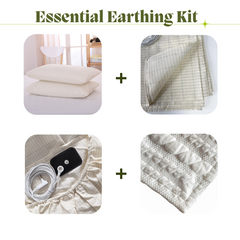
- Fitted grounding bedsheets: Provide full‑body contact through your regular linens for consistent grounding through the night.
- Grounding bed mats: Place under the fitted sheet or at the foot of the bed if you prefer targeted contact or share a bed.
- Starter kits: Include a grounding cord and an outlet ground checker so you can connect to a properly grounded outlet or to a dedicated ground rod where permitted.
Setup and safety tips for electromagnetic field safety:
- Verify the wall outlet ground with a tester before connecting any grounding product.
- Connect only to the ground port; never to neutral or hot. Use cords with an in‑line safety resistor (standard in quality grounding products).
- Route the grounding lead away from power cords and power supplies to minimize coupling.
- Avoid placing energized devices (laptops, chargers, electric blankets) on a grounded sheet.
- If you use implanted medical devices, consult your clinician before starting.
Combine grounding with other bedroom EMF reduction tactics for comprehensive EMF protection sleep:
- Move chargers, power strips, and lamps 3–6 feet from the bed; unplug what you don’t need.
- Put phones in airplane mode and keep them off the nightstand.
- Locate Wi‑Fi routers away from sleeping areas or set a nightly shutoff schedule.
- Address strong magnetic fields at the source (e.g., move the bed away from panels or large appliances).
Why this matters: While the health effects EMF are still being studied, reducing avoidable exposures is a prudent step. Grounding for sleep offers a simple, non‑invasive way to lower nighttime electric field burden—supporting calmer physiology and more restful nights. Terra Therapy’s fitted grounding bedsheets, bed mats, and Essential Grounding Starter Kits make it straightforward to integrate grounding into your sleep routine.
Benefits of Reduced EMF and Better Sleep
Cutting wireless and electrical exposure at night goes hand in hand with better sleep hygiene. Together, they create a quieter, darker, less stimulating environment that supports deeper rest and smoother recovery. When you reduce EMF while sleeping, you also remove many common disruptors that fragment sleep.
Key benefits you can expect:
- Fewer awakenings and stronger sleep continuity. Moving phones out of the bedroom or using airplane mode eliminates late‑night alerts, vibrations, and background data bursts that can cause micro‑arousals. Turning off nearby routers or placing them far from the bedroom lowers peak RF bursts that may otherwise coincide with light sleep.
- Calmer nervous system before bed. Removing screens and electronics from the nightstand reduces cognitive arousal and anticipatory checking. Many people find it easier to fall asleep when the bedroom is boring by design—no LEDs, fans from chargers, or device glow.
- Lower body voltage with grounding for sleep. A grounded bedsheet or mat can significantly reduce the AC electric fields your body couples with indoors. In typical homes, measured body voltage can drop from several volts to a small fraction of a volt when you’re grounded, depending on wiring and distance from cords. Many users report shorter sleep onset and more refreshing sleep alongside this change.
- Better next‑day energy and mood. Consolidated sleep supports executive function, emotional regulation, and stress resilience. People who practice bedroom EMF reduction often report clearer mornings because their sleep was less fragmented by notifications, noise, and device‑related light.
- Potential relief for stress and pain. High‑quality sleep is a proven modulator of pain perception and cortisol rhythms. Preliminary studies on earthing suggest improvements in perceived stress, morning cortisol patterns, and self‑reported pain; while more research is needed, combining grounding with strong sleep hygiene is a low‑risk strategy some find helpful.
- Precautionary electromagnetic field safety. While the health effects of EMF at everyday levels are still being studied, using the ALARA principle (as low as reasonably achievable) at night is practical and cost‑free. Distance is powerful: increasing phone distance from 10 cm to 1 m reduces RF power density at your body by roughly 100x (inverse‑square law). Similarly, moving power strips and chargers a meter from the bed measurably lowers both electric and magnetic fields.
- A cleaner, quieter sleep space. Fewer plugged‑in devices mean less heat, fan noise, and indicator light—small factors that cumulatively improve sleep depth.
Practical EMF protection sleep habits—airplane mode, distance from cords, router timers—paired with indoor grounding options like fitted grounding bedsheets or bed mats, create a restorative bedroom. These steps are simple, measurable, and aligned with sensible electromagnetic field safety without adding complexity to your nightly routine.