


Understanding Earthing and Grounding
Earthing (or grounding) is the practice of electrically connecting your body to the Earth so your body’s voltage equalizes with the Earth’s near-zero potential. In everyday indoor environments, the human body can accumulate static charge and pick up alternating electric fields from wiring and devices. Creating a conductive path to ground lets those charges dissipate and reduces induced body voltage.
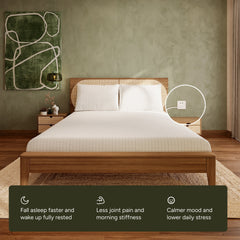
Grounding bedsheets achieve this by weaving conductive fibers—typically silver or carbon—into a soft base fabric. A snap connector links the sheet to a ground source through a cord that includes a built-in safety resistor (commonly about 1 MΩ) to limit current in the event of a fault. Grounding bedsheets conductivity depends on the fabric’s surface resistivity, the percentage and distribution of conductive fibers, and the quality of skin contact. Slight skin moisture generally lowers contact resistance and improves coupling, which is why many users notice consistent results during sleep.
How grounding works in practice is straightforward to demonstrate. With a multimeter referenced to a verified Earth ground, a person lying in bed may measure several volts of AC body voltage from ambient fields. Lying on a grounded sheet or mat typically reduces that reading by an order of magnitude or more. This potential equalization is the core of grounding mat science: it discharges static, provides a low-impedance path for charge movement, and reduces capacitive coupling to surrounding electric fields.
What does this mean for earthing sheet benefits? Preliminary studies and user reports suggest grounding for sleep may be associated with improved sleep quality, calmer nighttime nervous system activity, and reductions in perceived pain or stress. These findings are promising but not definitive; larger, well-controlled trials are still needed. The most established effect is the measurable drop in body voltage via electrical conductivity earthing.
Factors that influence performance:
- Conductive fiber content and weave density (more uniform conductive pathways improve contact)
- Cleanliness and oxidation of fibers (regular washing per care instructions helps maintain conductivity)
- Skin contact area and moisture (bare skin contact outperforms thick pajamas)
- Connection quality and ground integrity (use only a verified ground, never neutral or hot)
- Cord and resistor integrity (inspect snaps, cords, and safety resistor periodically)
Typical use cases include fitted grounding bedsheets for overnight use and desk mats for daytime work, both enabling indoor earthing with a consistent, passive connection to ground.
What is Electrical Conductivity?
Electrical conductivity is a material’s ability to let electric charge move through it. It’s the inverse of resistivity and is measured in siemens per meter (S/m). Metals like silver and copper are highly conductive, while cotton or polyester are essentially insulators. In earthing products, a conductive pathway is what enables charge equalization with the ground.
In grounding bedsheets, a grid of conductive fibers—commonly silver-coated thread or carbon-infused filaments—is woven into a soft base fabric. When the sheet is connected to a grounded outlet or a dedicated ground rod, its surface assumes the same electrical potential as the Earth. Touching that surface allows your body to equalize with ground, which can lower the AC body voltage induced by nearby wiring and electronics. This is the core of how grounding works and the basis for grounding mat science.
Several factors influence grounding bedsheets conductivity and real-world performance:
- Material: Silver-thread fabrics often have very low surface resistance (sometimes under 10 ohms per square), while carbon-based weaves can be higher. Lower resistance generally means a more reliable connection.
- Weave continuity: A consistent, tightly spaced grid ensures charge can move across the entire sleep surface.
- Connection hardware: A dedicated grounding cord with a built-in safety resistor (often 100 kΩ–1 MΩ) links the sheet to ground while limiting current in the event of a fault.
- Skin contact: Moist skin contact lowers interface resistance. A fitted sheet that maintains contact points improves grounding for sleep.
- Environment: Humidity increases conductivity at the skin–fabric interface; very dry air can increase resistance.
You can verify electrical conductivity earthing with simple tests. A continuity test confirms the sheet’s conductive grid is intact. A body-voltage meter often shows a drop from several volts AC (relative to ground) to near zero when lying on a grounded sheet—an objective indicator of effective coupling.
For effectiveness, there’s a threshold: the path must be conductive enough to maintain a stable connection to Earth throughout the night. Beyond that, ultra-low resistance isn’t necessary. Consistent contact and a safe, verified ground connection support the potential earthing sheet benefits people seek, such as a calmer sleep environment and reduced exposure to ambient electric fields.
Grounding Bedsheets Design Principles
At the core of how grounding works is a simple circuit: your skin contacts a conductive surface that is connected to Earth through a dedicated ground path. Effective grounding bedsheets conductivity depends on three elements working together—conductive textiles, a protected lead, and a verified earth connection—so the body can equalize to the planet’s electric potential.
Key design elements:
- Conductive fabric: High-quality earthing sheets weave silver-coated fibers into breathable cotton or bamboo. A tight, uniform grid distributes charge and keeps surface resistance low (often under 100 Ω/sq), improving electrical conductivity earthing across the entire sleep area. Grounding bed mats may use carbon-infused polyurethane for durability where fabric is impractical.
- Protected connection: A snap or stud links the sheet to a cord that includes an inline safety resistor (commonly 100 kΩ–1 MΩ). This limits fault current while allowing static and low-level AC-induced charges to dissipate—an approach borrowed from ESD-safe equipment design.
- True earth reference: The cord connects to the earth pin of a properly wired outlet or an outdoor ground rod. Only the ground is used—never neutral or live. Terra Therapy’s Essential Grounding Starter Kits include testers to confirm the outlet ground.
Contact mechanics matter for grounding for sleep. A fitted design keeps the conductive area taut so more skin makes contact during position changes. Light humidity or normal perspiration can reduce skin-to-fabric resistance; heavy clothing or thick insulating layers increase it. Many users place the fitted grounding bedsheet directly beneath a thin top sheet for comfort while maintaining continuity.
What “effective” looks like electrically: In a typical bedroom, an ungrounded person may measure 1–3 V AC body voltage from ambient fields. When connected to a grounding bed mat or sheet, that reading often drops to tens of millivolts. A multimeter or body-voltage meter provides a practical check of performance and helps visualize earthing sheet benefits without invoking health claims.
Durability and care affect long-term performance. Silver fibers can tarnish; wash in mild detergent, avoid bleach and fabric softeners, and air-dry or use low heat. Periodically test continuity from the fabric to the plug. Inspect strain reliefs on cords and avoid routing under sharp bed frames to preserve reliability.

How Conductivity Connects You
Conductivity is the bridge that links your body to the Earth’s reference potential. In grounding bedsheets, conductive fibers woven through the fabric create a low-resistance pathway from your skin to ground. A snap connector and grounding cord (with an inline safety resistor, typically ~100 kΩ–1 MΩ) plug into a grounded outlet or rod, allowing charge on your body to equalize with Earth. This is the core of grounding bedsheets conductivity and how grounding works indoors.
Here’s what that connection does:
- Equalizes electric potential between you and Earth, helping dissipate static charge.
- Reduces your body’s coupling to ambient AC electric fields from wiring and devices, often measurable as a significant drop in “body voltage.”
- Provides a consistent electrical reference while you sleep, which some users associate with calmer rest and fewer nighttime arousals.
You can see grounding mat science in action using simple tools. With a body-voltage meter, many people observe a reduction from several volts (relative to ground) to a fraction of a volt when touching a grounded sheet or mat. A multimeter’s continuity setting can confirm the sheet’s conductive grid is intact, while an outlet tester verifies a proper ground.
Conductive materials vary. Sheets often use silver-coated or carbon-based fibers; mats typically use carbon-infused polymer. Both aim for uniform conductivity across the surface. The inline resistor in the cord ensures current is limited for safety while still allowing equalization—key to electrical conductivity earthing.
Contact quality matters:
- Skin moisture and pressure lower contact resistance; bare skin works best.
- Humidity improves performance; very dry conditions may need more skin contact.
- Barriers like thick pajamas, mattress toppers, or non-conductive protectors reduce effectiveness.
- Residues from fabric softeners can insulate fibers; mild detergents help preserve conductivity.
Why this matters for earthing sheet benefits and grounding for sleep: by decreasing induced electric fields and stabilizing your body’s potential, the environment becomes electrically quieter. Early studies and user reports suggest this may align with better sleep quality and less perceived stress or pain. While individual results vary, the measurable electrical changes provide a tangible mechanism underlying the perceived effects.
Measuring Bedsheet Efficacy
Efficacy comes down to two questions: does the sheet provide a continuous, low-resistance path to ground, and does it measurably reduce the body’s exposure to ambient electric fields while you sleep. Measuring both gives a realistic picture of grounding bedsheets conductivity and performance over time.
Useful tools
- Receptacle/outlet tester (to confirm a valid ground)
- Digital multimeter with continuity and resistance
- Body voltage meter or a multimeter set to AC volts with a ground reference lead
- Optional: surface resistance meter for mapping fabric conductivity
Check fabric and snap continuity
- Place the sheet on a nonconductive surface. Using the multimeter in continuity mode, probe the snap and multiple points across the sleep area. You should hear continuous tone/see near-zero ohms locally.
- Map resistance end-to-end across the largest span you’ll sleep on. Woven conductive fabrics typically read in the tens to a few hundred ohms across long distances; uniform values indicate even conductivity.
- After washing, repeat the map. Track any drift. A small rise is normal; large increases or dead zones suggest wear or detergent/softener residue affecting fibers.
Verify the cord and safety path
- Measure from the sheet’s snap, through the cord, to the plug’s ground pin. Many grounding systems include an inline safety resistor (often 100 kΩ–1 MΩ); expect that value plus the sheet’s small resistance.
- Use an outlet tester to confirm the wall ground is present. If not, use a verified ground source per the product instructions.
Quantify body voltage reduction
- Lie in bed without the grounding connection. Connect the meter’s reference lead to ground and hold the probe with your hand or tape it to the skin. Note AC body voltage (commonly 1–10 V in typical bedrooms).
- Connect the sheet to ground and repeat while maintaining the same posture. Effective electrical conductivity earthing often shows a step-down to the low millivolt range or below ~0.3 V AC, depending on environment.
- This demonstrates how grounding works by equalizing your body’s potential with Earth and shunting capacitive electric fields.
Control contact variables
- Direct skin contact outperforms thick pajamas. Slightly humid skin improves coupling; a light water spritz can help initially.
- Ensure a snug fit so conductive zones align with where you sleep. Re-test after seasonal humidity changes.
Track real-world outcomes
- For grounding for sleep, log sleep onset latency, awakenings, and total sleep time with a tracker for 2–4 weeks.
- Pair subjective notes (restedness, tension) with the electrical data to contextualize earthing sheet benefits within grounding mat science.
Proven Health Benefits of Grounding
Grounding connects your body to the Earth’s reference potential through a conductive pathway. With grounding bedsheets, conductivity is achieved via a woven grid of conductive fibers that allow charge equalization. In practice, this reduces the AC body voltage induced by indoor wiring and dissipates built-up static charge—key mechanisms in how grounding works.
What does the research suggest?

- Sleep and cortisol: Small randomized and controlled pilot studies have reported improved sleep quality and fewer nighttime awakenings when participants slept on conductive earthing sheets. Some studies also observed a more normalized diurnal cortisol profile, consistent with reduced stress load—supporting grounding for sleep as a potential adjunct for circadian balance.
- Pain and recovery: In trials involving delayed-onset muscle soreness, grounded participants showed lower pain ratings and signs of faster recovery compared with sham-grounded controls. Case-series and small studies in people with chronic pain report reduced discomfort and better mobility, though larger trials are needed.
- Autonomic balance: Short laboratory sessions on grounding mats have demonstrated shifts in heart rate variability toward parasympathetic dominance (higher HF power, lower LF/HF), aligning with relaxation and stress reduction.
- Blood properties: Pilot work using microscopy has shown reduced red blood cell aggregation and improved zeta potential shortly after earthing, suggesting improved blood fluidity. These findings are preliminary and warrant confirmation.
- Perceived stress and mood: Questionnaires in several studies note lower stress and better mood during grounding periods, complementing physiological findings.
A practical example of grounding mat science: measuring AC body voltage with a multimeter while lying in bed often shows a drop from several volts to a small fraction when a grounded bed mat or sheet is contacted. This reflects electrical conductivity earthing at work, not a placebo effect.
Effectiveness depends on grounding bedsheets conductivity and contact quality. Direct skin contact, adequate humidity, and a continuous conductive path to ground are important. Most systems include a 100 kΩ–1 MΩ inline safety resistor; this limits fault current while allowing electron exchange. Loose clothing, very dry air, or poor outlet grounding can diminish earthing sheet benefits.
Overall, the early evidence is encouraging, especially for sleep, stress, and pain, with the caveat that larger, high-quality trials are still needed to confirm magnitude and durability of effects.
Real-World Impact and User Experiences
Customers often ask whether the conductive fabric and cords translate into measurable changes in daily life. In practice, the clearest way to see grounding bedsheets conductivity at work is to quantify it and pair those measurements with sleep and symptom tracking.
Users who test “how grounding works” at home typically start with a basic body-voltage check. Using a multimeter set to AC voltage, they’ll measure from the hand to a true ground reference, then repeat while touching a grounded sheet. In apartments with typical ambient electric fields, readings commonly drop from 1.5–4.0 V to below 0.1–0.2 V when the sheet is properly connected. A simple continuity tester can also confirm the sheet’s conductive pathway, illustrating the electrical conductivity earthing relies on.
What people report after they verify connectivity:
- Grounding for sleep: faster sleep onset and fewer nighttime awakenings, often noticed within 3–10 nights and reflected in wearable data as longer deep sleep percentages.
- Reduced morning stiffness or generalized aches, especially in the back, hips, or feet.
- Calmer mood and less reactivity to everyday stressors; some see lower resting heart rate or higher HRV on wearables (correlational, not diagnostic).
- More stable daytime energy with fewer afternoon dips.
Real-world examples:
- A rotating-shift nurse measured body voltage decreasing from 2.8 V to 0.09 V after installing a fitted earthing sheet. Her sleep tracker showed sleep latency falling from ~28 to ~12 minutes over two weeks, aligning with commonly reported earthing sheet benefits.
- A remote worker placed a grounding mat under the desk and used a bed mat at night. Besides reduced static shocks, they reported less foot soreness and fewer early-morning awakenings.
Factors that shape outcomes:
- Connection quality: A grounded outlet or dedicated ground rod is essential. An outlet tester can confirm ground presence; miswired outlets blunt results.
- Skin contact and humidity: Direct contact through a thin cotton layer works; thick foam toppers or fully synthetic pajamas reduce contact. Slight skin moisture improves conductivity.
- Bedding care: Washing maintains silver-fiber performance; avoid bleach and fabric softeners that can coat fibers.
- Environment: High EMF areas often show larger body-voltage drops, making changes easier to verify.
Not everyone notices changes immediately, but users who confirm connectivity and optimize contact are more likely to experience the grounding mat science discussed above in daily, trackable ways.
Maximizing Your Grounding Benefits
To get the most from earthing at home, focus on the quality of the electrical connection and your skin contact. Grounding bedsheets conductivity depends on a continuous network of conductive fibers (often silver) plus a secure path to Earth through the cord and your building’s ground.
Optimize the setup
- Verify the outlet ground. Use a simple outlet tester to confirm the ground pin is active. Avoid power strips and ungrounded adapters.
- Connect directly. Plug the grounding cord into the wall’s ground port or a dedicated ground rod. Keep the lead short and away from energized cords; cross power cables at 90° to reduce induced noise.
- Know the safety resistor. Quality cords include a 100kΩ–1MΩ inline resistor that limits fault current while still allowing charge equalization.
Maximize skin contact
- Ensure bare-skin contact with the sheet for a meaningful portion of the night. A thin cotton pajama layer reduces coupling; synthetic fibers reduce it more.
- If using a grounding mat under a regular sheet, choose a natural-fiber top sheet and keep it thin and dry to preserve coupling.
- Hydration matters. Slight skin moisture improves electrical conductivity earthing. In very dry rooms, a light mist on the contact area before bed can help.
Measure and confirm
- A simple multimeter body-voltage test shows how grounding works. Measure AC body voltage in bed, then while touching the grounded sheet; a substantial drop indicates effective coupling.
- You can also check continuity across different points on the sheet with a multimeter’s resistance mode to verify the conductive grid is intact.
Care and maintenance
- Wash regularly to remove body oils that impede contact. Use mild detergent; avoid bleach, fabric softeners, and oxidizing cleaners that can tarnish silver fibers and diminish earthing sheet benefits.
- Tumble dry low or air dry. Ensure the snap connector and cord are fully dry before use.
- Periodically inspect snaps and cords for looseness or corrosion.
Improve the bedroom environment

- Increase distance from chargers, routers, and lamp transformers near the bed. Unplug or move them a few feet away.
- Keep the grounding lead from running parallel to power cords for long distances.
Use consistently
- Aim for nightly, all-night contact. Many users tracking grounding for sleep report more noticeable effects with continuous overnight use than with short daytime sessions.
If results are inconsistent, revisit outlet grounding, increase bare-skin contact area, try a different contact position, or test a grounding mat as a control. These practical steps align with grounding mat science and help ensure your setup is actually conductive and effective.
Selecting Quality Grounding Products
When comparing options, prioritize grounding bedsheets conductivity. The fabric’s ability to move charge from your skin to a verified earth ground determines whether you’ll experience the core earthing sheet benefits linked with improved sleep and lower stress. Look for a continuous, low-resistance path from the contact surface, through the snap and cord, to the grounding point.
Materials matter. High-quality sheets use cotton interwoven with silver-coated fibers in a tight grid (≈5–10 mm spacing) to ensure consistent skin contact during sleep. A higher conductive fiber density generally improves electrical conductivity earthing and durability. Grounding mats typically use carbon-infused rubber for robust wear on floors or under a desk; these are ideal for understanding grounding mat science and daily, barefoot use.
Check resistance and safety design. Well-engineered cords include an inline safety resistor (commonly 100 kΩ–1 MΩ) to limit fault current while allowing charge equalization. Surface resistance of the sheet material should be low and uniform; makers should publish ohms-per-square or continuity data. Corrosion-resistant snaps and strain-relieved cords reduce intermittent connections that can impair how grounding works.
Verify performance at home:
- Confirm your outlet’s ground with a three-light tester.
- Do a continuity check: multimeter on resistance mode; probe the sheet’s conductive area and the cord snap—look for a stable reading indicating connection.
- Assess body voltage: measure your AC body voltage in bed (baseline), then while connected to the sheet. A meaningful drop indicates effective grounding for sleep.
- If an outlet ground is unavailable, use a dedicated ground rod as instructed by the manufacturer.
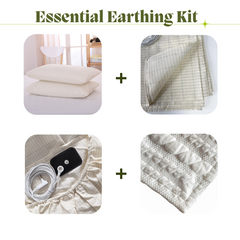
Fit and coverage influence outcomes. Fitted Grounding Bedsheets maximize contact for restless sleepers and full-body exposure overnight. Grounding Bed Mats concentrate contact under calves or torso and travel well. Essential Grounding Starter Kits that bundle a tester, cord with safety resistor, and clear setup guide simplify installation and reduce user error.
Review care instructions—avoid bleach, fabric softeners, and harsh oxidizers that degrade silver conductivity. Finally, look for transparent lab data, material safety disclosures (e.g., RoHS/REACH, OEKO-TEX for textiles), and support resources to ensure the product delivers consistent, verifiable conductivity and the practical benefits you’re seeking.
Reconnecting for Better Well-being
Modern life keeps us insulated—rubber-soled shoes, elevated beds, and synthetic flooring limit contact with the Earth’s surface. Grounding aims to restore that connection by allowing the body’s electric potential to equalize with the planet’s near-zero voltage. In practical terms, grounding bedsheets create a conductive path between your skin and a verified ground, supporting electrical conductivity earthing indoors.
The core of grounding bedsheets conductivity is the material. Sheets and mats are woven or layered with conductive fibers—commonly silver, carbon, or stainless-steel threads—linked via a snap and cord to a grounded outlet or a dedicated ground rod. When you lie on the sheet with bare skin contact, electrons can move, and your body voltage drops relative to nearby alternating electric fields (from wiring, devices, and lamps). This is the same grounding principle used in electronics and ESD mats, applied to the human body.
A simple at-home test illustrates the change. Using a body-voltage meter or multimeter:
- Stand near your bed with typical devices on; readings often range from about 2–8 volts AC.
- Touch a connected grounding mat or bedsheet; the reading commonly falls toward 0.1–0.3 volts AC.
This demonstrates how grounding reduces induced voltage, which is a key mechanism in grounding mat science.
Why this matters for sleep: Lower ambient electric potential and reduced microcurrents may help the nervous system settle, supporting grounding for sleep. Small pilot studies report improvements in sleep quality, stress, and discomfort when participants used grounding systems at night. While evidence is still developing, many users describe earthing sheet benefits like quicker sleep onset and calmer nights.
Effectiveness depends on a few specifics:
- Direct skin contact is best; thin pajamas are usually fine, but thick layers reduce contact.
- Slight skin moisture improves conductivity; dry air may require more contact area.
- Verify your outlet ground with a tester before use; avoid ungrounded adapters.
- Wash gently and skip fabric softeners or bleach to preserve conductive fibers.
- Route the cord away from power cables to limit added fields.
- As a precaution, unplug during nearby electrical storms and consult your clinician if you use implanted medical devices.
For all-day options, a grounding bed mat or an under-desk mat offers similar conductivity, enabling how grounding works indoors without changing your bedding.